
On Knowing and Forgoing Definition

(Written in May 2025 as my final paper for my Anthropology and Sociology course ‘Topics in Globalisation and Postcolonialism’.)
In October 2024, a photographer called Rachel Moore shared a photo on Instagram that quickly went viral. A specialist in underwater photography, the photo was a closeup shot of a humpback whale’s eye in French Polynesian waters. The complex pattern of the eye coupled with the strong detail of the shot made an uncomfortable feeling in me first before awe and then amazement. Moore titled the image taken ‘Galaxies in Her Eyes’ and part of her caption read: “Over the years, I’ve noticed that many people come wanting to be seen with the whales, rather than truly see them… This moment of eye contact was beyond my wildest dreams. I’ve never encountered a whale like this one, and it was the most profoundly beautiful experience of my life.” A lot of the comments celebrated the beauty of such a rare moment, but others had more to say about the ability to capture it. According to some people, this was one of those instances where humans captured and shared something that was not supposed to be captured and shared. There were certain things, they felt, that we were not meant to see or know, just by the basic limitations of being. The idea was that humans don’t come face-to-face with whales for a reason; we simply occupy different spaces in the world so this was a glitch in the Matrix.
Some weeks after Moore shared the first photos, she shared the tragic announcement that the same whale had been killed in a ship collision. It apparently happened just days after she took the photos. Part of her Instagram caption said: “I never imagined this would be the narrative I’d share. I had hoped her story would be about connection, curiosity, love, and transcendence. Instead, it ended in pain and suffering. She was brutally disfigured and endured hours of pain and suffering before finally succumbing to her wounds and drowning. I still can’t believe this happened to her; she didn’t deserve this after all the kindness and curiosity she showed us humans. In the end, we are responsible for her death.” Here we see something similar to “Even God himself couldn’t sink this ship” said about the Titanic, and Icarus flying too close to the sun. Humans are always testing our limits and our search to know completely is an example of it.
The whale situation communicates an idea that has developed from my experience in this course and provided a frame for understanding our world today. In our search for meaning and understanding, humans have maintained an obsessive chase after definition, naming, knowing, and by extension, being all-knowing. We, as led by western knowledge practices, have pursued dominance through definition and stratification. We want to know so we can name and then understand. However, we should open ourselves up to the idea that not everything is to be known and we can never be omniscient because that’s not our reality.
I saw this with Braudel trying to define and draw out history and the world system, to define the human, Beauvoir trying to define the nonman human, Abu-Lughod and Said trying to define the nonwestern human, and Fanon trying to define the nonwhite human. I saw this through Ho and Zaloom’s work of exploring the small circle of what the world calls financial experts, people who hold the power to define what is economy and influence who gets wealthy. Even though buying and selling have been happening skillfully before them and will continue to happen after them, they try to define what it means to be a human with means. I even saw this with the discussion of wine and how wine enthusiasts and etiquette coaches try to define what it means to be a human that is cultured. The tension here for me is that the definition doesn’t make the human, and I lean more towards the belief we are what we are without the explanations and the definitions which end up being limitations. Maybe no one needs to declare to you that you have a culture, or that you have the means to meet your needs, or that you are a woman.
Frantz Fanon’s Black Skin, White Masks discusses the issue of race, specifically with blackness and whiteness in his time, and teaches us a lot about the ability and power in knowing oneself and others in the same process. For Fanon, Black people are looking for this kind of recognition of self from white people. In both the psychological and the social, racism and colonialism combine to cause serious harm to the Black person. They struggle with something as primordial as communication or speech–taking up the language of the colonizer–and also struggle with the ways they see and understand the world as they take up the lenses of the colonizer. On the definition and explanation of the Black person by the white person, he wrote “the Negro is an animal, the Negro is bad, the Negro is wicked, the Negro is ugly” (Fanon 1967, 81). On the othering that happens within these definitions, he wrote “not only must the black man be black; he must be black in relation to the white man” (Fanon 1967, 78). For the white man to be beautiful and good and rational, the Black man has to be bad and ugly and emotional. I want to add something to this from today in 2025. The West is the First World, the rest is in the Second and even Third. The West has developed, and the rest is developing, typically with the burden of a resource curse. The white people are in the Global North while the brown people are in the Global South. The creation of such definitions and terminologies shows the struggle for power in trying to know and name.
Fanon also talked about his experience of speaking French and being talked down to by white people from France, which is a familiar example to people with colonial experiences. He spoke about the domination through language, which happens today for example in the immigration process where language skills can be demanded in order to “integrate” into the new environment. I offer an addition to this concept: language learning is a way of trying to be in control, to dominate through knowledge, a way of becoming all-knowing.
In Europe, it is common to speak multiple languages and know the language of your neighboring countries. Native Europeans, to me, feel the need to communicate across borders out of a desire to be closer to others and know them more, to maintain some control. In my experience in Nigeria, however, the presence of hundreds of other native languages does not spur a desire to know more than what is necessary. While we can share regional languages, we seem to maintain the line of thinking that “I have my own language and culture, and you have yours.” Going beyond my language to know yours, therefore, is doing more than is necessary because not everything is to be known. Ideas, secrets–knowledge–are kept safe and protected in a native language.
This is also shown in the language learning trends. People in the world choose languages to learn based on what they project the world would be speaking more of in the future, or in other words, what can gain them an economic advantage. We saw this with the trend of learning English to get more global reach, Spanish as the number of worldwide speakers rose, Arabic as the Middle East grew in importance to certain “world powers”, and Mandarin Chinese as China rose in global influence. These days, the new languages to learn for the future seem to be African languages. People in the development sector talk often about the rise of Africa as the population is estimated to grow significantly in coming decades. With the prediction that the world focus would (only now?) be shifting to the continent, people from outside the continent are casually starting to expose themselves to its languages and other cultural elements so they are connected when it becomes important to be so. This is just the other side of dominance through language: I learn your language because you are colonizing me, or you learn my language to colonize me. Pursuing knowledge becomes a way of pursuing dominance when you break down the door to, in this case, a culture and let yourself in.
What I’ve taken away from this course is that we need to approach knowledge differently, especially as academics and scholars. Instead of seeing knowledge as something that is always out there to take, ‘knowing’ should be seen more as something that is almost sacred. There is a space and place to know but some things are too valuable to be interfered with simply out of the desire to know them. We can’t look a whale in the eye. Western knowledge practices say that everything can be observed and everything can be known as long as you are willing to work towards it. It says that things can be known and then explained, typically after observing from a distance. Approaches to knowledge elsewhere in the world, however, say that there is a limit to knowing and, when it is possible and permissible to know, it happens when you are right in it. Consider the use of other scholars’ words to back up your claims versus the use of a story that has been told over and over and morphed in the process of the retelling. Consider seeking to know a land through studying it versus through understanding it not only in relation to yourself but also to other kinds of living beings (Levac et al. 2018, 4). Indeed, there is also a physical and therefore limited element to this that challenges our obsession with a pursuit of knowledge that is mental and boundless.
A Diné man who is indigenous to what is now the U.S. said this when they were forced out of their land in the 1980s: “When the white man talks of relocation he talks of finding a new place to live, a new job, a new place to pray to his God… The white man can practice his religion anywhere, he does not know the earth. The Diné are different, the land is sacred to us, we cannot practice our religion elsewhere, only on the land where we are known” (Dunn 2022). Here, knowledge is a relationship where he knows the land and the land knows him. Is it possible for someone who is not Diné to have the same relationship, the same encounters, or to obtain the same knowledge of that land? I doubt it. I also doubt that he would be fixated on defining and explaining every detail of not just his land but also the land on the other side of the globe.
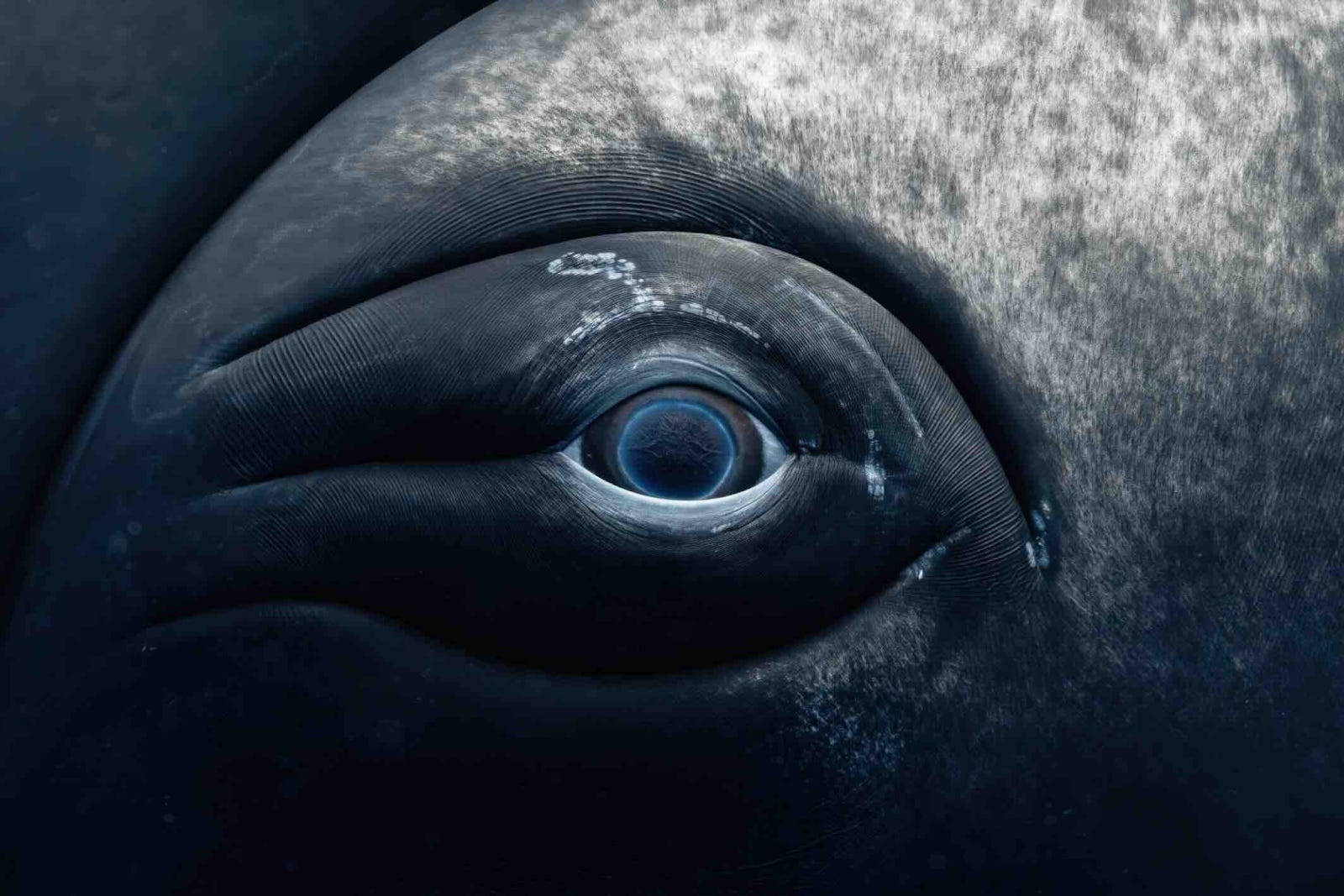
‘Galaxies in Her Eyes’ by Rachel Moore
Bibliography
Dunn, Michael. “Indigenous and Western Perspectives.” theoryofknowledge.net, June 2022. https://theoryofknowledge.net/free-tok-notes/tok-optional-themes/knowledge-and-indigenous-societies/indigenous-and-western-perspectives/.
Fanon, Frantz. Black Skin, White Masks. 1st Evergreen ed. New York: Grove Press, 1982.
Levac, Leah, Gail Baikie, and Cindy Hanson. “LEARNING ACROSS INDIGENOUS AND WESTERN KNOWLEDGE SYSTEMS AND INTERSECTIONALITY: RECONCILING SOCIAL SCIENCE RESEARCH APPROACHES,” 2018. https://doi.org/10.13140/RG.2.2.19973.65763.
Moore, Rachel. “Instagram.” Accessed May 22, 2025. https://www.instagram.com/moore_rachel/.
RACHEL MOORE. “RACHEL MOORE.” Accessed May 22, 2025.